

Duo and dd Dual-Drain
(Distortion-free Screen)
Engineered : Core Engineering Principles

Our unique Duo and ‘dd’ construction connect the screen without distorting, twisting or mechanically stressing the precision-laid screen, all of which can cause measurable performance anomalies.

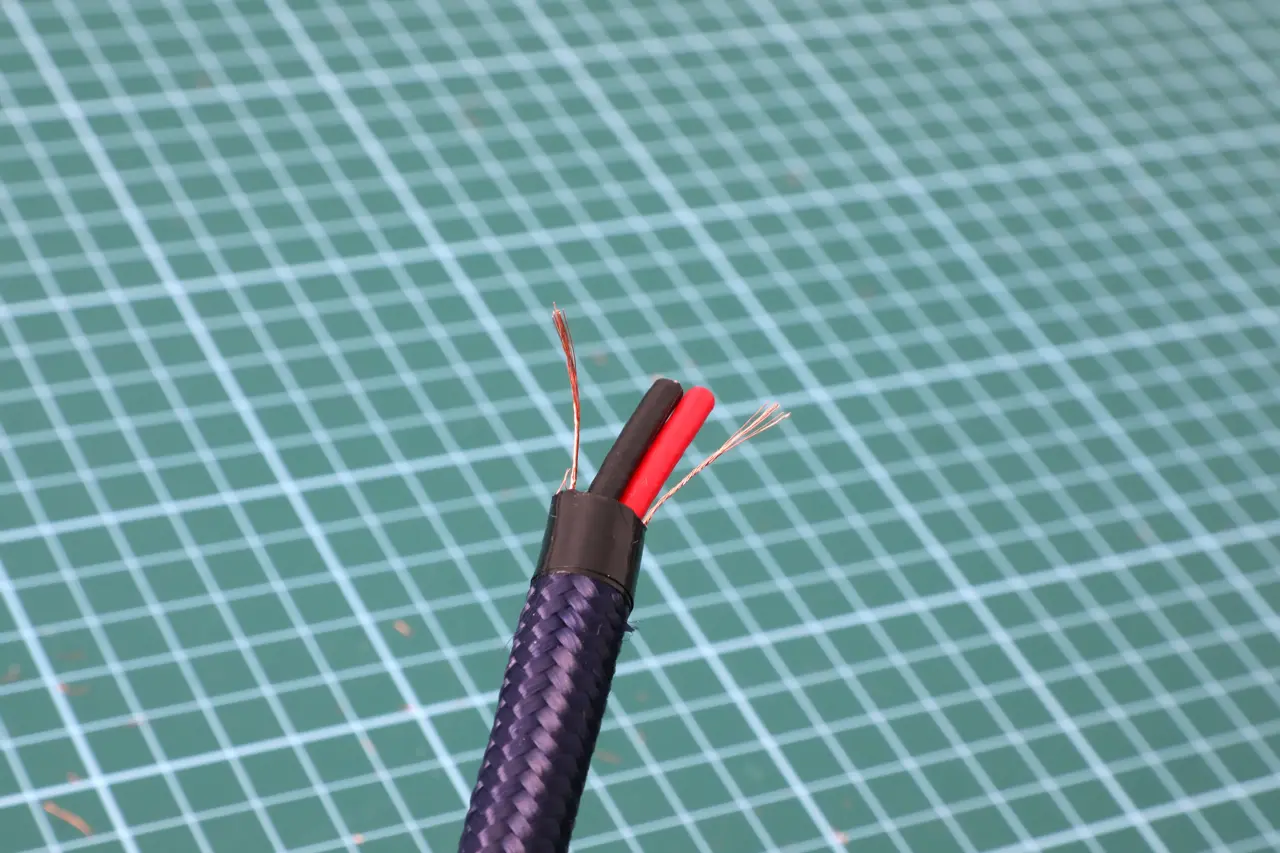

The Process
We have invested in machinery to quickly and efficiently perform a number of the key stages in our manufacturing process.
But working with our dual-drain system is one of those instances where there’s no substitute for the ‘hands-on’ experience of a skilled operator.
Atlas ‘dd’ Dual Drain
Normally screened cables suffer from screen distortion when they are prepared for production. (If you’ve ever wired a plug or connector which uses a screened cable, you've done this yourself, cutting back and probably twisting the screening braid for termination). This distortion of the screen has a measurable impact, effectively changing the impedance and therefore the performance of the cable.
Our ‘dd’ configuration is based on a simplified version of the techniques originally developed for our then top-of-the-range Mavros and Asimi interconnects. Twin symmetrical drain wires (each attached to 180° segments of the plug) are inserted between a 100% copper/Mylar™ foil and screen.
The unique dd system connects the screen effectively to the cable return/plug interface, meaning the cable can be terminated without distorting, twisting or mechanically stressing the precision-laid screen. The benefits are in maintaining a consistent low impedance load to the plug, and a total 360° screening against noise and signal loss caused by RFI (Radio Frequency Interference).
Atlas ‘Duo’ Dual Drain

Our Duo symmetrical topology essentially takes our dual-drain approach one step further, with the paired hot and cold conductors surrounded by their own independent precision-woven OFC screen. Each of the screen pairs is then precisely twisted and configured with a common Grun connection, draining both screens directly to ground.
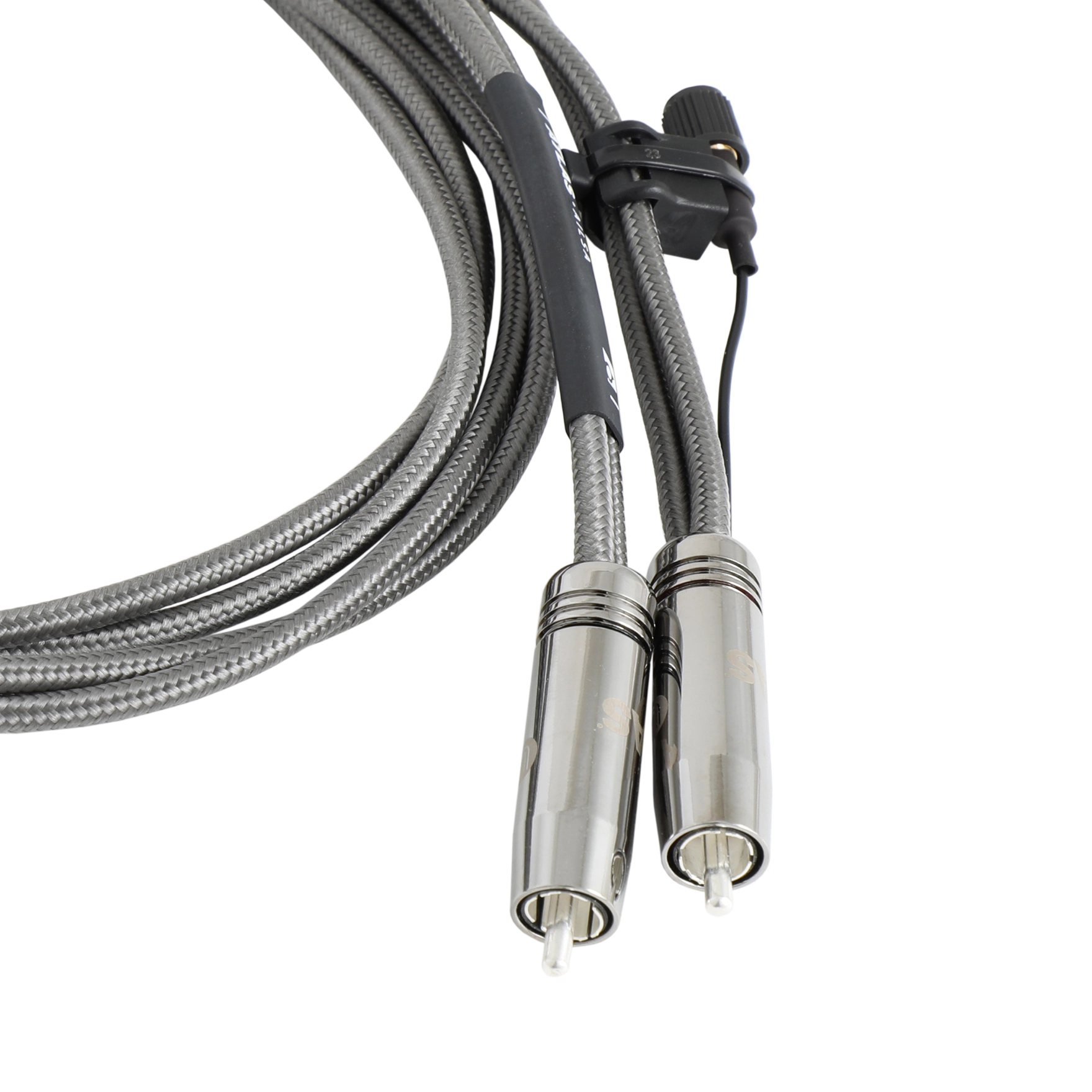
Duo has been introduced, where relevant, in our Hyper and Ailsa cable families, and defines a new standard for induced noise rejection in this class of products.
the performance connection
